

Summary: Yes.
First, consumer surveys of plant-based and cultivated meat are extremely promising, and consumer interest is likely to grow substantially once products exist at taste and price parity. At that point, the benefits of plant-based and cultivated meat for food safety, the environment, global health, and animals can take center stage.
Second, it’s not automatic, of course; it’ll take some time (and work), especially considering the culinary PTSD that many consumers have from a history of expensive and subpar products. Cultivated meat may not be hampered by this.
Third, the economic and food security benefits give the meat industry and governments strong incentives to send price- and taste-competitive alt meats shooting up the adoption S-curve.
***
In my first “Meat Matters” essay, I answered the question we hear most often at the Good Food Institute: Can we really make cheap cultivated meat? Spoiler: It seems likely, yes.
In this essay, I’ll answer the next most common question: If plant-based and cultivated meats hit taste and price parity, will anyone eat them?
The short answer: Yes.
First things first: At taste and price parity, latent demand exists.
A review of 28 peer reviewed articles on consumer acceptance of plant-based meat concluded that “there is certainly a great market potential for plant-based meat… which is expected to be more pronounced in the future, with increasing environmental and health awareness.”
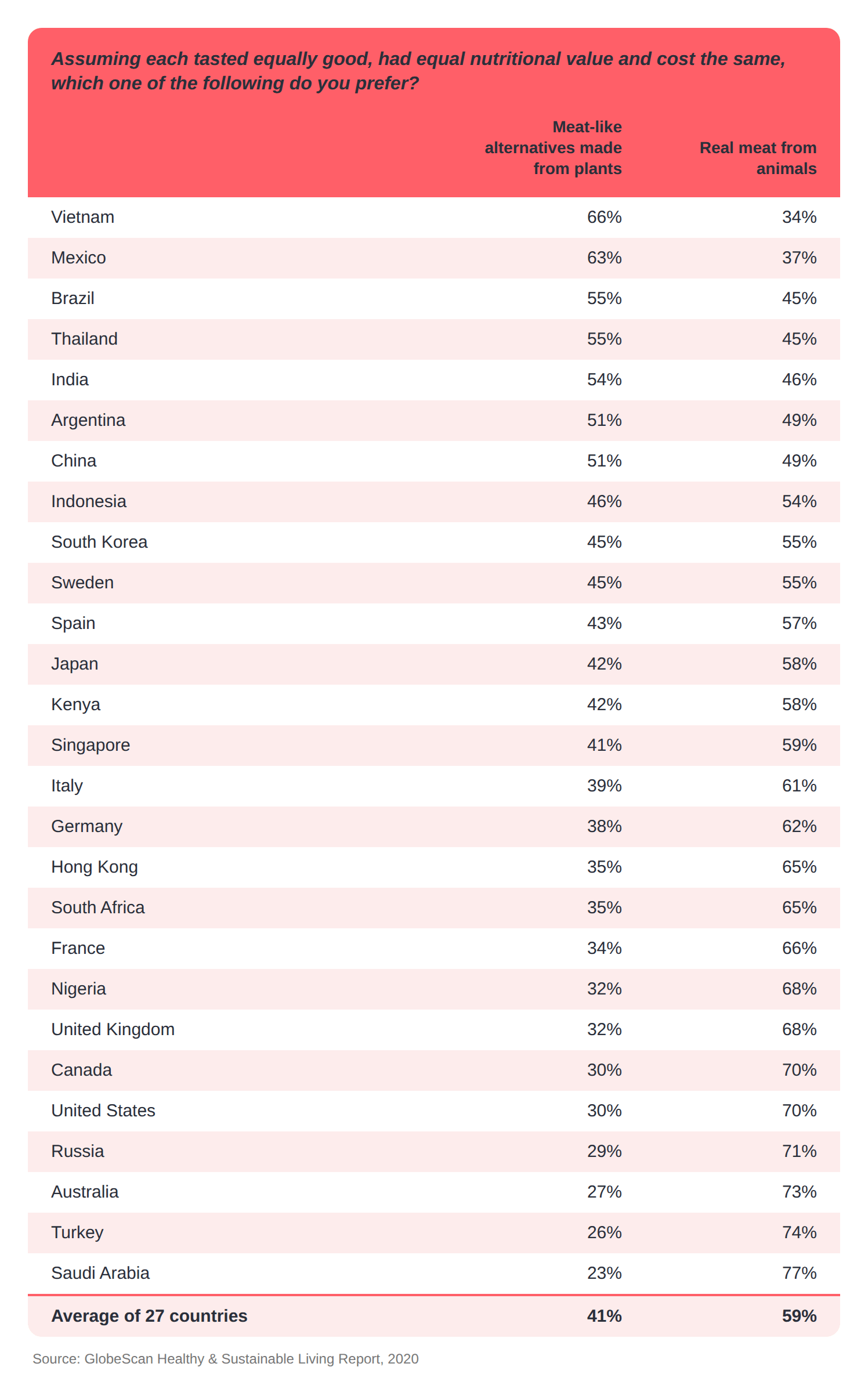
For example, a massive survey across 27 countries found that more than 40% of respondents would prefer “meat-like alternatives” from plants over “real meat from animals.” In China, Brazil, and India, the preference for plant-based meat was more than half. In the US, it was 30%.
What about cultivated meat? University of Bath researcher Chris Bryant reviewed forty studies of cultivated meat; his key conclusions:
there is “a substantial market for cultured meat”
“acceptance can be increased with positive information”; and
“widespread acceptance will depend in large part on the price and taste.”
See also this review of 18 other studies, which reaches similar conclusions.
For example, a global survey by Barclays of 5,012 consumers (from China, India, Brazil, the US and UK) found that two thirds would consider purchasing cultivated meat if it were available, and half said they’d pay more for it. Acceptance numbers were particularly high in China, at 84%.
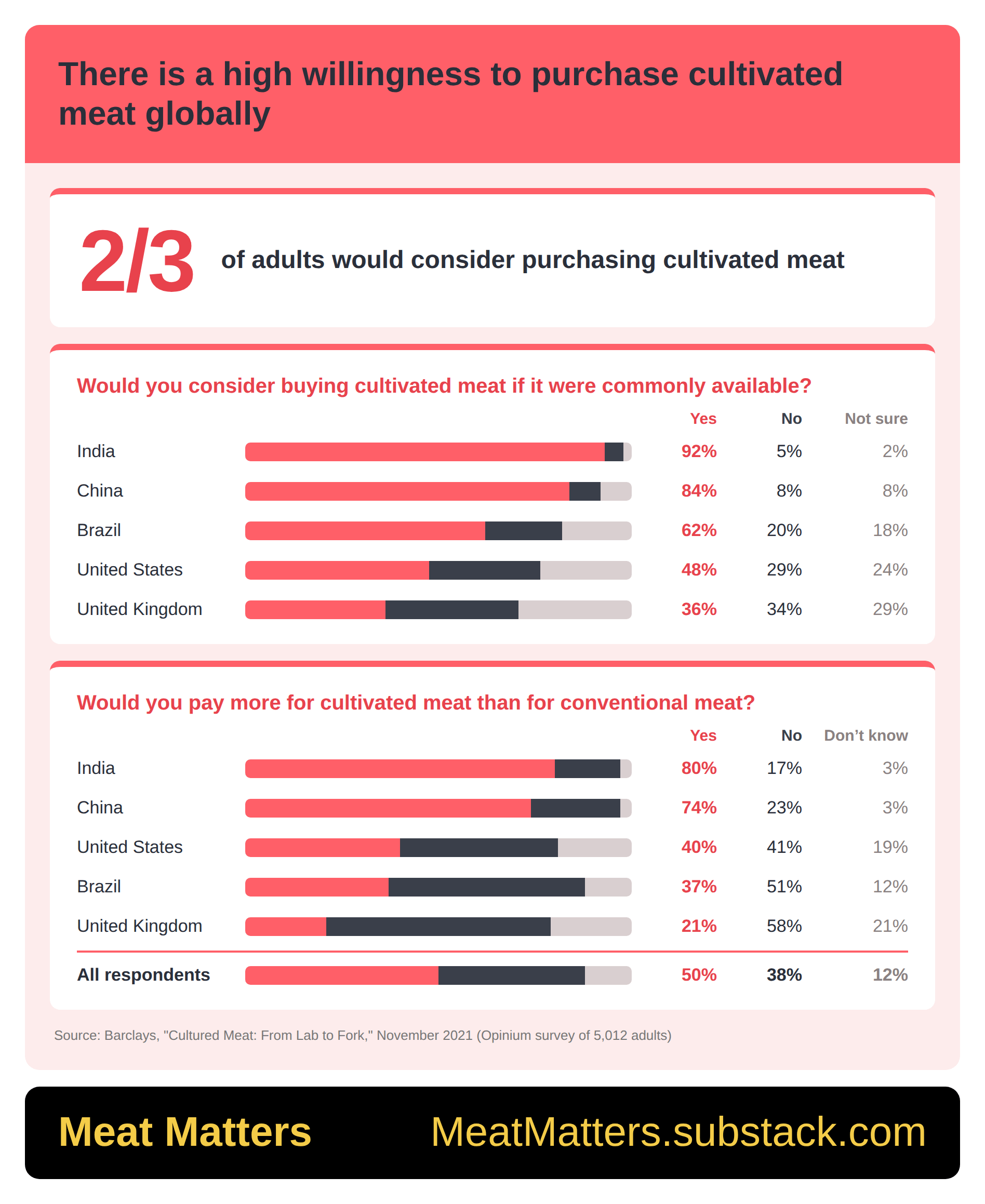
It’s nice to see those China numbers for plant-based and cultivated meat, since China produces 26 percent of the world’s land animal meat and 58 percent of the world’s farmed fish.
With regard to cultivated meat, three consistent trends are important:
younger respondents are the most enthusiastic about cultivated meat.
“men tend to be more accepting of cultured meat than women.”
“Cultured meat tends to be more appealing to meat-eaters compared to vegetarians” and “to those who are higher in meat attachment” (i.e., people who really love meat).
The fact that the biggest meat eaters are most enthusiastic about cultivated meat is a very good sign.
Okay, then WTF happened to plant-based meat?
There has been quite a bit of speculation about the failure of plant-based meat to live up to early projections; what happened?
Honestly, it’s not a mystery: Quite a few consumer surveys have been done, and every single one finds the same thing: People didn’t like the products (or expected not to like them) and they cost too much. All the early projections that plant-based meat sales would skyrocket assumed that both problems would be easier to solve than they turned out to be.
In chapter 6 of Meat, I reflect on what happened at some length, but the short version is this: Almost no one really understood the assignment, as Impossible founder Pat Brown explains in this brilliant New Yorker piece by Tad Friend.
As perhaps the most glaring example, it cost Impossible north of $100 million to develop the Impossible burger; almost all of the startups billing themselves as “the next Impossible” had no research budget at all; they were all the next Gardenburger, not the next Impossible.
It’s also hard for the few products that meat-eating consumers like to stand out, since most consumers think that a veggie burger is a veggie burger is a veggie burger. Of 122 products sensory tested by NECTAR, just 4 came very close to parity with their conventional counterparts (the Impossible Burger, Impossible chicken breast, Impossible chicken nuggets, and Morningstar’s chicken nuggets), and none of them quite got there. (I’m waiting anxiously for NECTAR’s European analysis.)
There’s also the issue of culinary PTSD for a lot of consumers: For decades, vegetarian “meats” have been very much “vegetarian” first, and “meat” not at all; they were far healthier, but they were also absurdly bland. The concept of MVP (minimum viable product) does not work for plant-based meat; consumers assume all the products are unappealing to people who like animal meat and always will be.
After decades of disappointing products, the category is starting from negative 50; people will need to hear that the new generation is different, and then they will need to try the products. The real test comes when parity is common and consumers know it; that will take some time to build.
Consumer attitudes are still taking shape.
Once products reach taste and price parity (they have to hit both metrics) with conventional meat (and consumers believe it), there’s reason to believe consumer acceptance will be even better than the consumer surveys cited above would indicate. That’s because for the consumers who expressed reservations about plant-based or cultivated meat, the top reason—every single time—was an expectation that the products would taste bad.
That’s true even when the prompt directs participants to assume taste parity.
For example, a study in the journal Appetite told participants to assume identical deliciousness across conventional, plant-based, and cultivated beef. Roughly one third chose either the plant-based or cultivated burger (21 and 11 percent); those numbers are already pretty good, but get this: Asked at the end about palatability, 92% of participants said they thought the conventional burger would taste better. And yet almost one-third still chose the plant-based or cultivated burger.
Similarly, a 2024 Purdue study of cultivated meat found that two-thirds of respondents expressed a willingness to try taste-identical cultivated beef and chicken. But here again, when asked about palatability, participants ranked conventional chicken and beef as 55% and 63% better-tasting than their cultivated counterparts; participants expected cultivated meat to be mushy or have an odd texture. And just to reiterate: The question told them to assume identical taste; they simply didn’t believe it.
When people actually taste it, their doubts fade: Researchers at Singapore Management University found that enthusiasm for cultivated meat increased significantly after consumers tried it, because it tasted good. Consumers who had doubts came away impressed by the flavor, and so their attitudes shifted dramatically.
To me, the level of consumer openness to cultivated meat is especially remarkable, since humans are biologically programmed to be wary of new foods (something you’ve never eaten before could kill you!).
As the product is validated by food safety agencies and introduced to the market, consumers will then be able to learn that it tastes just like the meat they’re used to, and that it also has significant additional benefits that they care about, as I’ll discuss more below.
Taste and price get you in the door.
Study after study confirms the hierarchy of food choice: Taste and price come first and second (sometimes in reverse order). Then health. Then everything else. Researchers who study food choice treat this observation as settled.
So it’s not surprising that studies of why consumers tried and stopped eating plant-based meat, as well as studies of why consumers have never tried them, align to this finding: The products cost too much, and consumers didn’t like them or expected to not like them.
As I discuss in chapter 5 of Meat, food choice sits at the base of Maslow’s hierarchy of needs; it’s a part of what Nobel prize winner Daniel Kahneman calls “System 1” thinking, alongside breathing and sleeping; it’s a part of self-preservation, and the vast majority of people are not going to sacrifice deliciousness or affordability for benefits related to social goods. But if we can equalize taste and price, that will allow consumers to add secondary considerations.
Indeed, one of the key findings of the meta-reviews discussed above is that simply giving consumers information about the benefits of alternative meats increased consumers’ openness to them. For example, a study from Harvard and the University of Pennsylvania found that consumers were willing to pay twice as much for cultivated meat when the environmental and animal protection benefits were stressed.
Regarding cultivated meat, vanishingly few consumers have tried it, and most have heard very little or nothing at all about it; they don’t have strong views and are answering consumer surveys based on very weak preferences. Influence is as simple as adding a few sentences to the survey question. That’s not something that would work with, say, abortion or gun control.
Most people haven’t thought much about cultivated meat; they don’t have strong views and are answering consumer surveys based on very weak preferences. Influence is as simple as adding a few sentences to the survey question.
So taste and price get alt meats in the door. Once we have those satisfied, we’ll be able to lean in on some of the other benefits of alt meat consumption, e.g., food safety, environmental protection, global health, and animals.
Would you like some microplastics with that?
Let’s start with food safety: Specifically, plant-based and cultivated meat will not have the bacterial contamination, drug residues, and other contaminants that routinely show up in conventional meat.
Here are some facts that I explore in chapter 6 of Meat:
USDA allows salmonella in almost 10% of whole chickens, 15% of chicken parts, and 25% of ground chicken. Consumer Reports blames USDA’s lack of on-farm authority and the “filthy and crowded conditions in which most chickens are raised” for the massive rates of salmonella and campylobacter in conventional meat.
FDA regulations allow residues from more than 100 different drugs in the US meat supply, as long as they don’t go above an “Acceptable Daily Intake” level; those drugs include ivermectin, progesterone, ractopamine, and tetracycline.
Enforcement is not strict: A USDA audit in 2024 found that 20% of meat labeled “raised without antibiotics” was contaminated with antibiotics.
Things are even worse for seafood, which can be contaminated with dioxins, microplastics, drug residues, and toxic mercury. See also here.
From the New York Times: “Most people with mercury in their bodies get it from eating contaminated seafood, and, even in small amounts, it can harm the brains of unborn children and have toxic effects on the human nervous, digestive, and immune systems.”
In 2023, USDA decided to allow the sale of meat from chickens with tumors, including cancerous tumors: The honor system “ensures” that tumors are cut out of chicken carcasses before the meat enters the human food supply.
Cultivated meat is the same meat, with far less exposure to bacteria and without the drug residues and environmental toxins. Cultivated seafood will have all the health benefits of conventional seafood, but without the dioxin, mercury, and microplastics.
Plant-based meats are also drug-free, and they also don’t have organs that might rupture or bodies that can grow tumors. Plus, they’re healthier: fewer calories, less fat and saturated fat, and more fiber.
And the plant-based meats that consumers like the most in sensory studies also have more protein, which could be a strong selling point in a world so obsessed with protein.
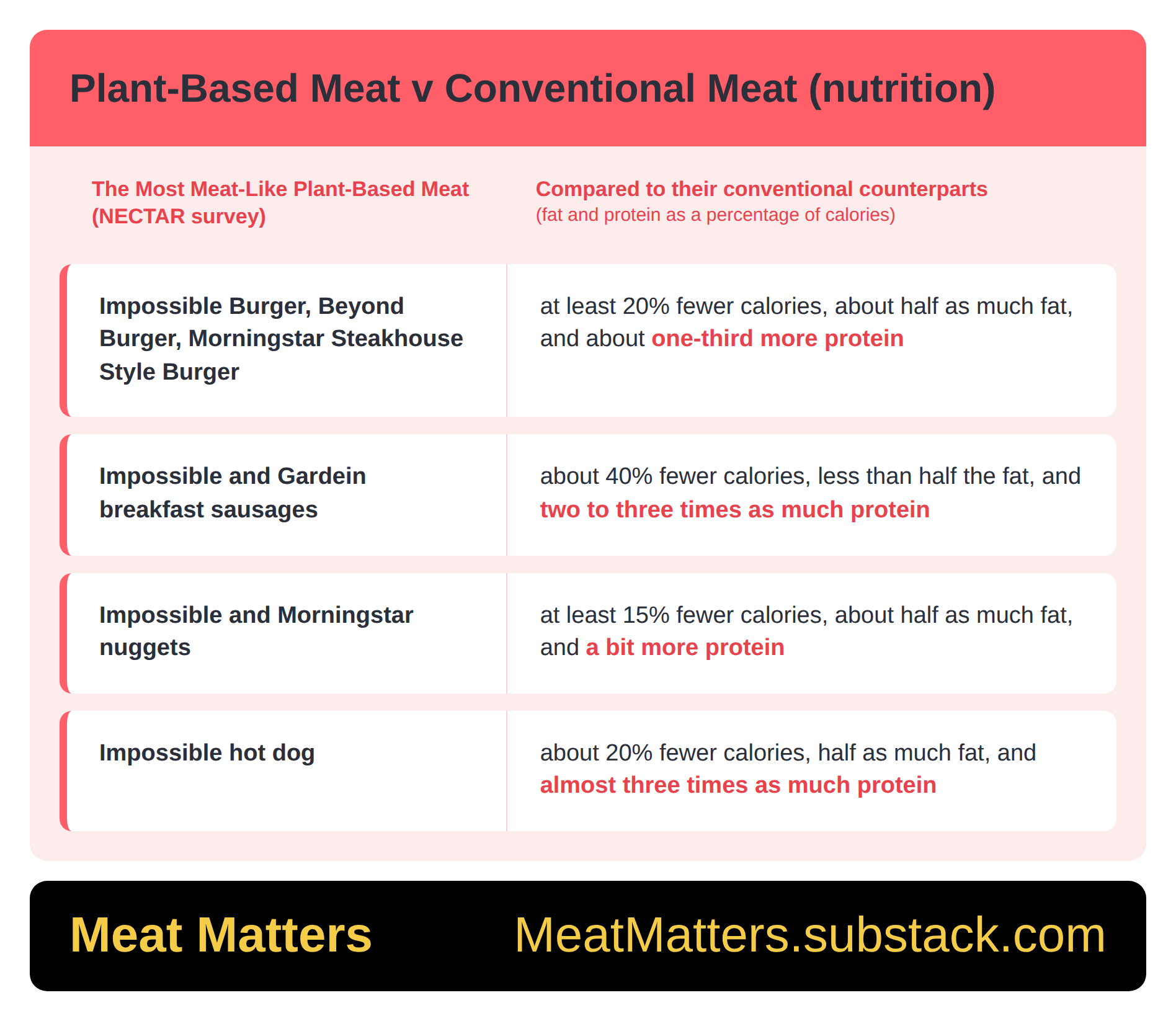
It seems likely to me that food safety alone will net us a significant consumer base for both cultivated meat and plant-based meat, once the products compete on taste and price. See here, here, and here.
The only meat that is climate-friendly
A few years back, Bill Gates and former NASA engineer Mark Rober (one of the most popular science-focused YouTubers) had lunch. In a video that’s been viewed more than 80 million times, Gates and Rober bond over their shared love of meat, and their discomfort with its environmental cost.
Gates was convinced, after decades of working on climate, that meat was going to be the hardest challenge. His view: Everyone who cares about climate change knows about meat’s adverse impact, but no one knew what to do about it, for 2 reasons:
First, they didn’t want to stop eating meat, and they didn’t think anyone else would either. Just like the world is not going to consume less energy or drive less (however laudable both of those personal actions might be), the world is not going to eat less meat.
Second, if every promising cattle-methane intervention worked perfectly, they would cut emissions by about 800 million metric tons; that’s a lot, but there’s no way they’re going to get anywhere near that. And even if they did, increased meat consumption is projected to add 2.9 billion metric tons of additional annual emissions by 2050. So at best, these measures could reduce that increase to about 2.1 billion metric tons of additional emissions from escalating global meat consumption.
I’ve been immersed in climateworld for the past ten years, and I hear constantly from people who love meat and can’t wait for plant-based and cultivated meat to reach taste and price parity with conventional meat. They’ll be early adopters, and they’ll bring the broader climate and nature communities with them.
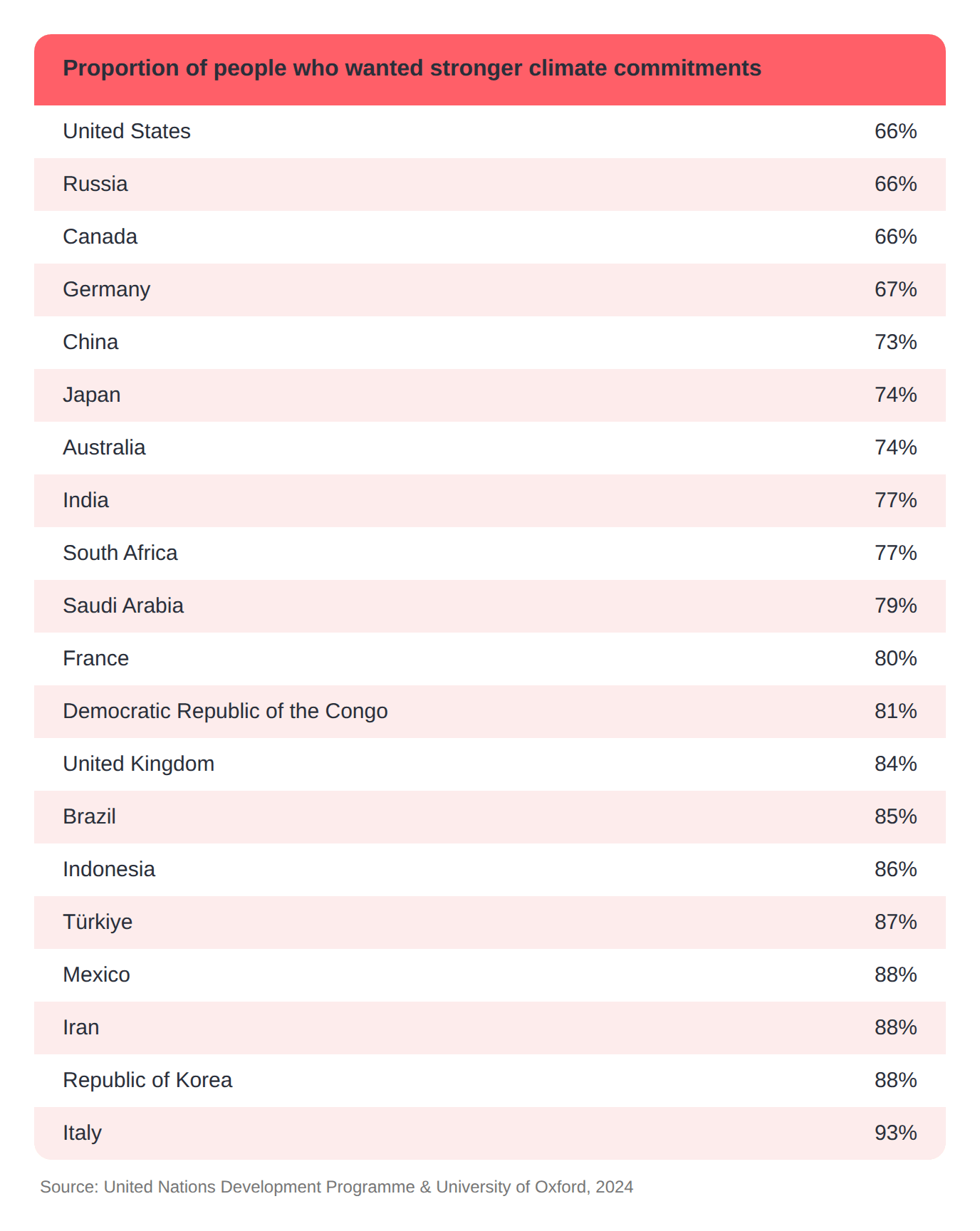
That community is enormous. Globally, 4 out of 5 people want their governments to do more on climate, including three-quarters of people in China and two-thirds in the US. (See also here and here.) Caring about climate hasn’t changed what most people eat, because the alternatives cost more and taste worse. Take those objections away, and billions of people who already care have a reason to choose differently.
Stopping superbugs and pandemics at their source
Global health experts are in the same spot. People who work on antimicrobial resistance understand that 70 percent of human-relevant antibiotics are fed to farm animals, that this process is one of the top two causes of antimicrobial resistance, and that “the Covid-19 pandemic will ‘look minor’ compared with what humanity faces from the growing number of superbugs resistant to current drugs.”
They’ve understood for decades that the use of human drugs in farm animals is a ticking time bomb that may spell “the end of modern medicine,” and yet the problem gets worse year after year and decade after decade. Europe is making some progress on AMR, but setbacks everywhere else far outweigh Europe’s gains.
And two of the seven most likely causes of the next pandemic are increased meat consumption and industrial animal farming, according to 18 zoonotic disease specialists convened by the International Livestock Research Institute and the United Nations Environment Programme.
Global health leaders feel powerless: The world will not eat less meat, and every major driver of both AMR and pandemic risk continues to get worse. Alternative meats are the one intervention that could, finally, lower global risk for both AMR and the next pandemic.
Give them scalable, parity-priced alternative meats, and I believe we can turn them into a powerful new coalition ready to drive adoption at a global scale.
For people who love meat and care about animals, i.e., almost everyone
In Meat, I tell the story of my friend Gene Weingarten, a two-time Pulitzer prize winner for the Washington Post, who (in addition to his award-winning features for the Post’s Sunday Magazine) wrote a weekly humor column for decades. A few of his columns had to do with how much he would love to stop eating meat, but how hard that is for someone who really loves the taste (which describes nearly everyone).
If you are a vegetarian, you almost certainly know dozens of people like this.
Other notable thinkers who feel (or felt) that eating meat is deeply immoral but also impossible to give up: Richard Dawkins, Sam Harris, and the late Charles Krauthammer, all of whom have made the case that industrial animal farming is a moral atrocity that future generations will view with the same sort of incredulous outrage we now feel about slavery.
Dawkins and Harris have both spoken about how enthusiastic they would be to switch to cultivated meat, even if it came with a hefty price premium, and Gene has said precisely that to me directly on multiple occasions.
The general public may not consider factory farming to be our generation’s moral scourge that is on par with slavery, but they do care about farm animal welfare. When farm animal protection measures land on state ballots, they pass by wide margins, even in conservative states like Arizona and Florida, both of which voted to ban gestation crates.
Anti-cruelty is so bipartisan that across ideologies, people will even vote against their financial interests in order to protect farm animals: When California banned cages and crates in 2008, the opposition flooded the airwaves with the message that voting yes would raise the price of eggs and pork. That won over the state’s two most important newspapers, the Los Angeles Times and San Francisco Chronicle, as well as the state capital’s daily paper, the Sacramento Bee, and others—all of which ran “vote no” editorials, with a focus on food prices.
Both liberals and conservatives voted overwhelmingly to ban crates and cages anyway; they saw confinement practices as simply indefensible, regardless of the cost of bacon and eggs. The vote was a landslide: 63.5-36.5%. Notably, conservatives turned out in droves that year to ban gay marriage (in the most LGBTQ-friendly state in the country): 52%-48%.
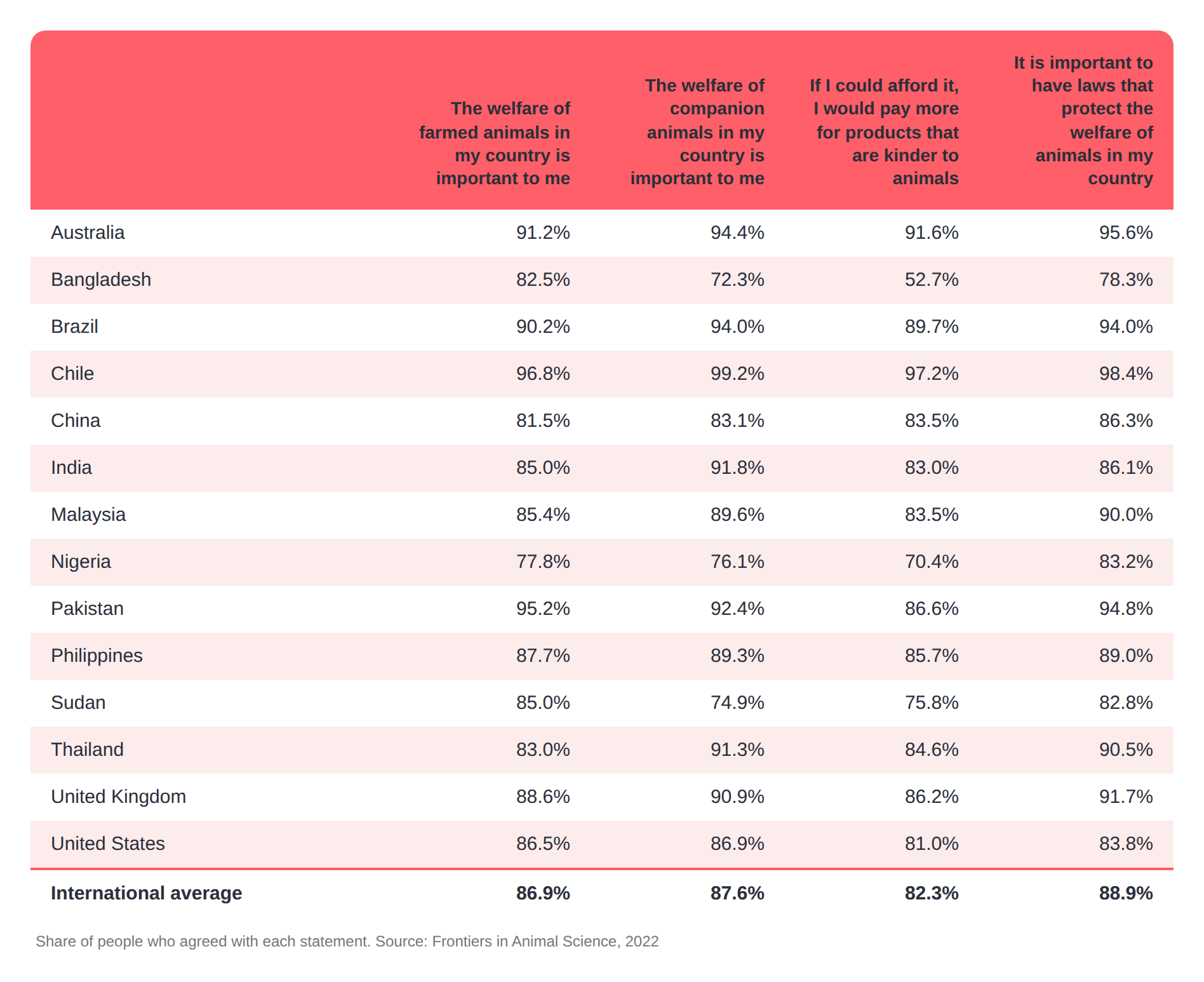
Those results are backed up by consumer research across the US and globally: Across a 14-country study that included the US and China, 87% of respondents said farm-animal welfare was important to them and 80% expressed support for strong anti-cruelty laws for farm animals. See also here, here, and here.
If an animal-free option matched meat on taste and price, I think you’d see meaningful adoption from people who would be relieved to stop participating in something they already dislike but don’t feel they can give up.
Consumers won’t be doing this alone. Two powerful institutions have their own reasons to want alt meats to win: the meat industry and governments.
Big Meat is waiting for parity, too.
The world’s biggest meat companies are already investing in plant-based and cultivated meat. The reason is simple: the inefficiency that makes conventional meat so bad for the environment (cycling crops through animals so we can eat the animals) is also a business opportunity: Make meat with a fraction of the inputs, and your margins improve.
Plus, the current system is extremely fragile: growing crops, shipping them to feed mills, operating feed mills, shipping the feed to farms, operating farms, and shipping the animals to slaughter; each link in that chain can break, as Food System Innovations vice president for science Liz Specht spelled out in Wired.
Add in avian flu, pig flu, and the range of other animal diseases, plus food safety scares and recalls, labor issues, water scarcity issues, and most recently, the New World Screwworm, a parasitic fly whose larvae eat the living flesh of warm-blooded animals, threatening livestock and the beef supply.
America’s two largest meat companies, Tyson Foods and Cargill, have both invested in multiple cultivated meat companies, and Tyson Foods has also been an active investor in plant-based meat, while Cargill has an entire plant-based proteins division.
And the world’s largest conventional meat company, the Brazilian company JBS, owns one of the largest European plant-based meat companies, The Vegetarian Butcher, and has invested $100 million into cultivated meat, including a production plant in Florianópolis, Brazil. JBS has also been a key partner to GFI Brazil.
In a Business Week cover story, then CEO of Tyson Foods Tom Hayes explained, “If we can grow the meat without the animal, why wouldn’t we?” And at the Concordia Summit a few years ago, Tyson board member and strategy committee chair John Randal Tyson explained that Tyson had “made a lot of great investments in both plant-based and [cultivated meat], which we’re excited about. We see that as the next frontier.”
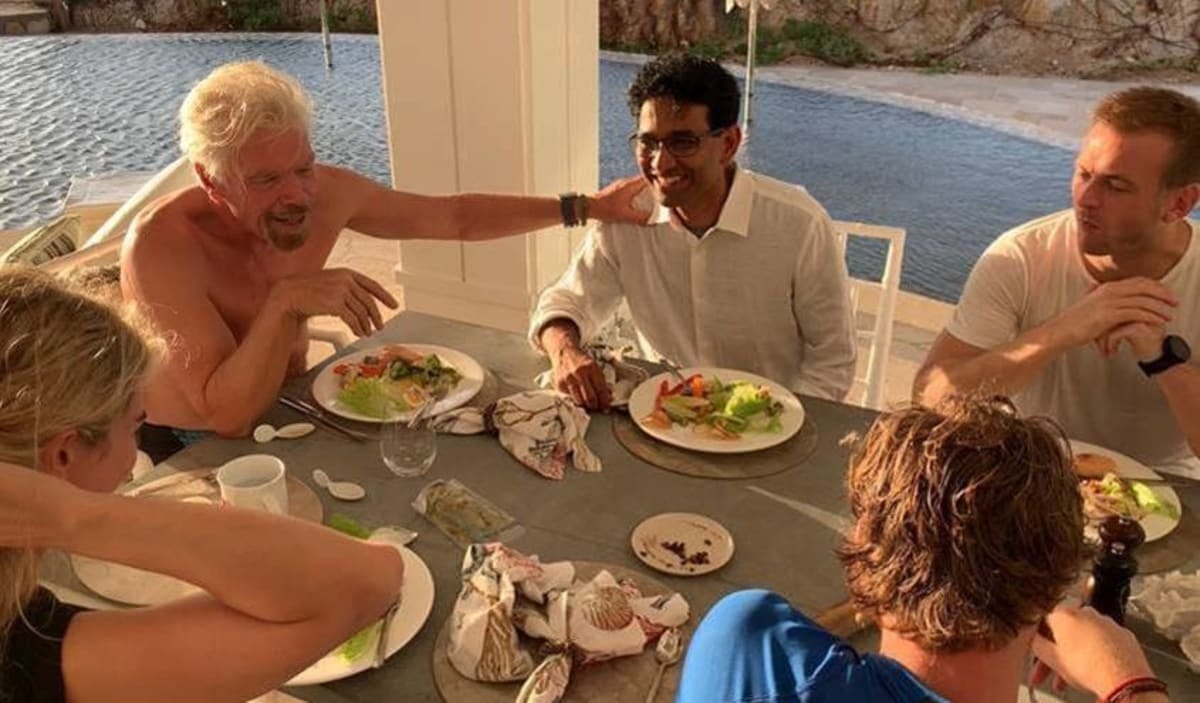
“In 30 years or so, I believe we will look back and be shocked at what was the accepted way we killed animals en masse for food. I think that in the future [cultivated] and plant-based meat will become the norm, and in 30 years it is unlikely animals will need to be killed for food anymore.” —Richard Branson
Our most powerful ally: governments
Governments want alt meats to win for the same reasons the meat industry does, at national scale: Better margins and sturdier supply chains for companies add up to economic growth and food security for countries, as documented by the Center for Strategic and International Studies in the think tank’s 5,000 word report: Mitigating Risk and Capturing Opportunity: The Future of Alternative Proteins.
In the report, CSIS makes the case that the US government should prioritize alternative meats in the same way it prioritizes biopharma and advanced chips for AI.
(Aside: CSIS director of global food and water security Caitlin Welsh, who worked previously at the State Department and National Security Council under presidents Obama and Trump, penned the foreword to Meat.)
The economic case is straightforward: The governments that are dominant in pharma, agriculture, and tech got that way by supporting those industries. Alternative meats are the same play for a meat and seafood market worth around $2 trillion globally.
The food security case is even more compelling: Governments care about making sure their populations have enough food. That’s why the earliest countries to show alt meat leadership were Singapore and Israel, two countries that have the technological and economic capacity to support alt meat innovation and that import almost all of their food.
Barclays head of venture capital Matt Spence, who endorsed Meat and helped push my thinking on the food security case for alternative meats, came to this conclusion during his time at the Defense Department and National Security Council. His core thesis is that the countries that can feed themselves, and help feed others, have strategic power. Alternative meats can be a major part of that story.
Plus, the same things that point toward alt meats as a boon for companies are also appealing to all countries: Less food chain fragility, less animal disease, fewer food safety incidents, better resilience in the face of food systems shocks, and less vulnerability to agroterrorism.
Just seven years ago, there was no government support to speak of for alt meats, beyond support from Israel and Singapore for private sector innovators. Now more than 30 governments are supporting open access science. It needs to be more, and there is a screaming need for scale-up support, but the trend-line is encouraging.
One government matters more than the rest.
Will China own this too?
As Chinese consumers have gotten wealthier, demand for meat and animal feed imports has surged. As a result, China’s food self-sufficiency fell from 100% when it joined the World Trade Organization to 66% in 2020, and it continues to fall.
The country would like to change that, and China is a country that knows how to scale technologies. China scaled up solar and EV batteries, and it now controls more than 75% of global production for both technologies. It could do the same thing with alt meats.
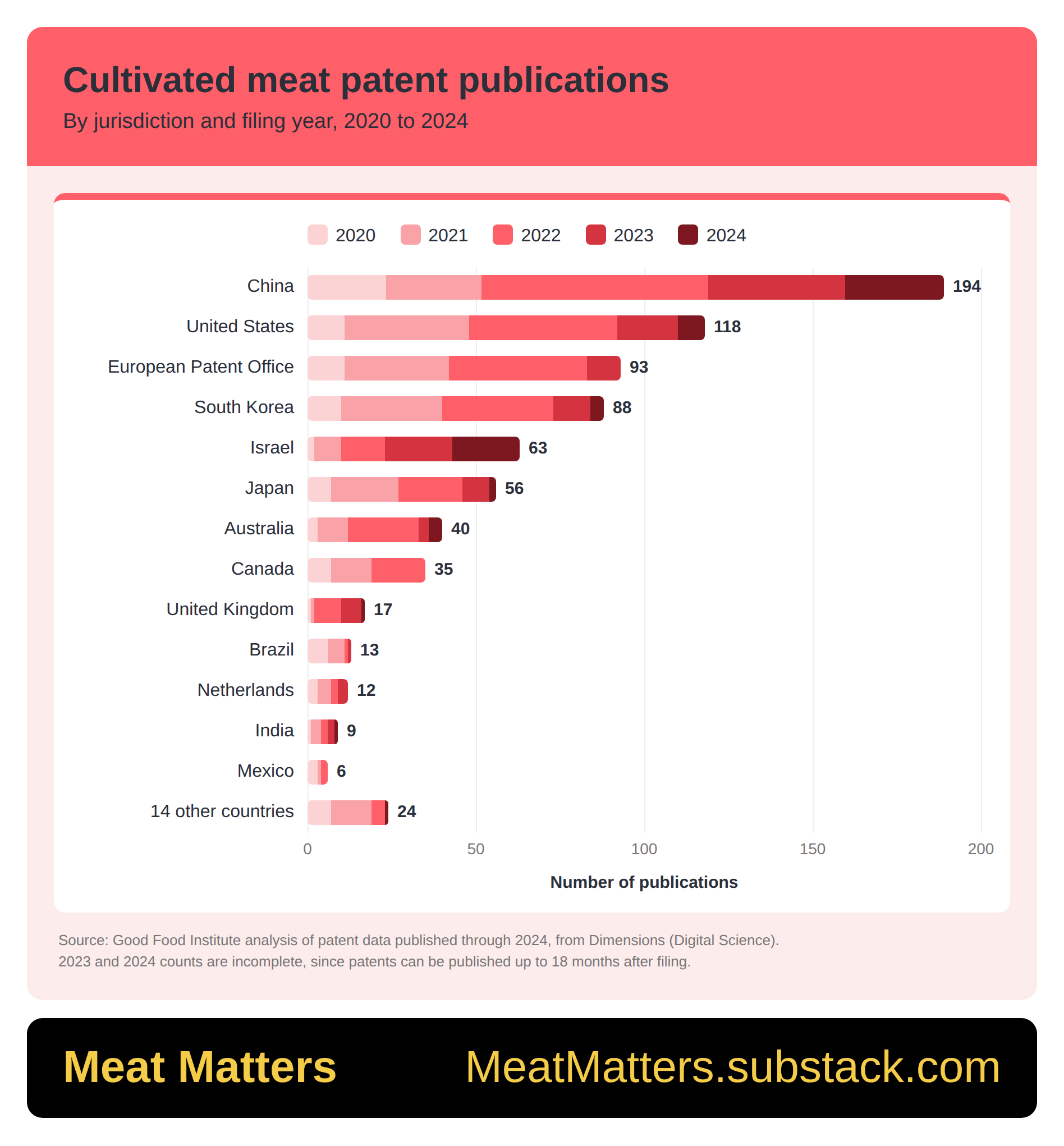
Plant-based and cultivated meats offer a way to produce meat with a fraction of the land, water, feed crops, and supply-chain fragility required by conventional meat. They also make animal disease irrelevant to meat production, which is no small thing for a country that has repeatedly been rocked by African swine fever, bird flu, and other livestock diseases.
That’s why “China is serious about achieving breakthroughs in so-called future foods, which include lab-grown, plant-based and other alternative meats,” as discussed by China-watcher Jacob Dreyer for the New York Times, who shares that China has “made the creation of domestic alternative protein industries part of its national economic development strategy. It’s become a central component of wide-ranging plans to achieve food security, and funding is pouring into new research initiatives.”
A recent report from the Sustainable Development focused think tank Systemiq details China’s growing support for alternative meats and asks the question: Do Europe and the US want China to dominate alt meats like it dominates the solar and electric vehicle markets?
Even 10% adoption will pay significant dividends.
Alternative meats could still fail, but if they do, it will be because the world did not bring the will, not because the science was impossible or consumers didn’t want the products.
Parity will create the opportunity for broad adoption, but that adoption won’t happen by magic. For plant-based meat, we have our work cut out for us: Consumers have had generations of disappointing experiences, and most products on the market still are not good enough. Even excellent new products will have to distinguish themselves from the rest of the category if we’re going to persuade people to give plant-based meat another chance.
Cultivated meat’s novelty will make some people wary, but that novelty is also an opportunity: Consumers are not carrying generations of bad experiences with the category. And as discussed above, when the product tastes good, firsthand experience will improve attitudes. Once cultivated meat reaches price parity, it could move up the adoption S-curve quickly.
We don’t have to wait for parity to get started: Today’s best products cost more than animal meat, but early adopters are already buying them, and many more people would, given a nudge. Every purchase helps fund the scale-up that brings prices down, and as cultivated meat enters the market and plant-based meat gets better and cheaper, that group will grow.
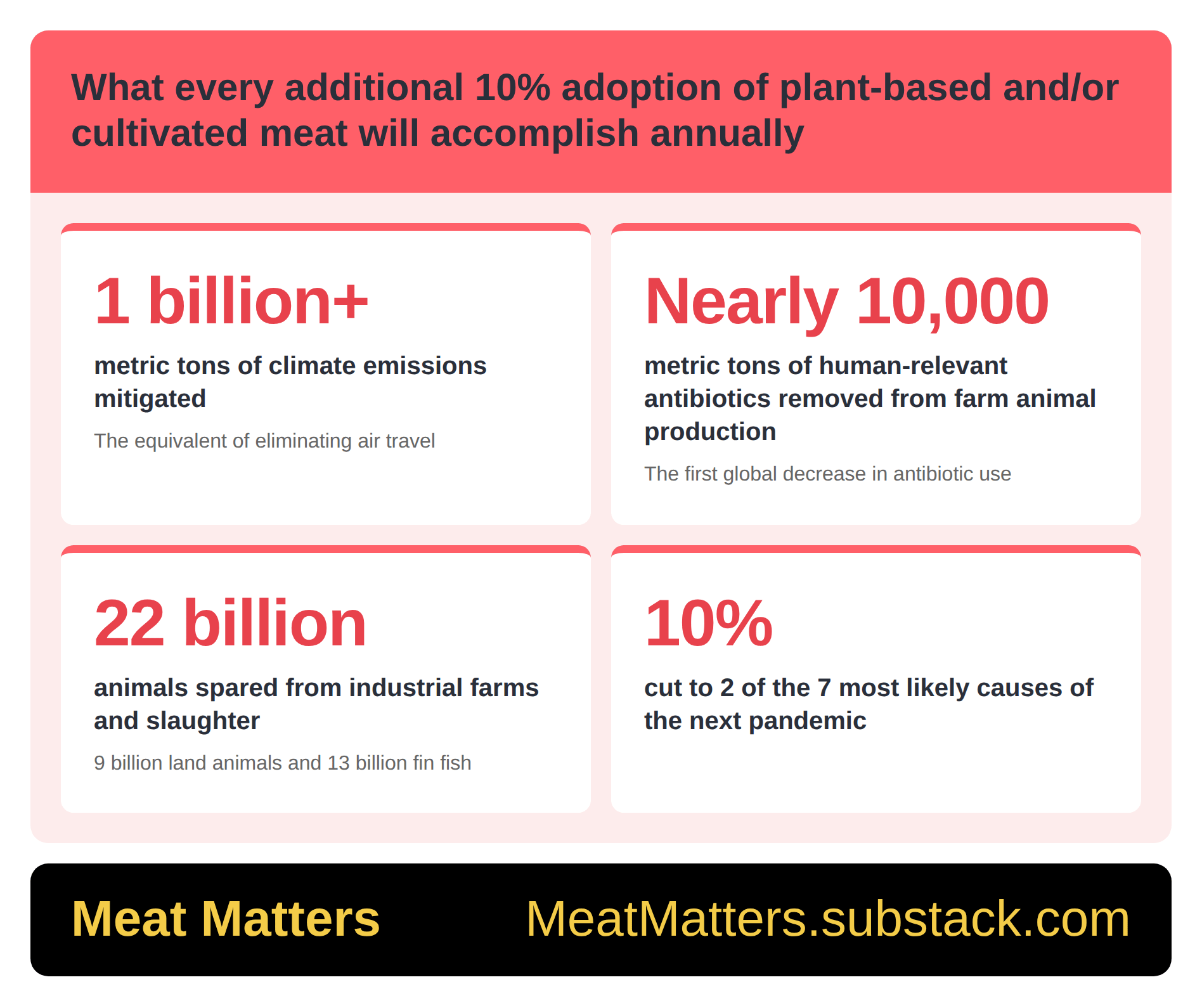
Speed matters. Consider what we will accomplish for every 10 percent of conventional meat we displace:
more than 1 billion metric tons of climate mitigation (the equivalent of eliminating air travel)
almost 10,000 metric tons of human-relevant antibiotics removed from farm animal production
approximately 9 billion land animals and 13 billion fin fish spared from industrial farms and slaughter
a 10 percent decrease in two of the seven most likely causes of the next pandemic
So, if we make it, will anyone eat it?
All signs point toward “yes.”
Today, people concerned about the consequences of meat production are fighting an uphill battle: No one wants to pay more for a product they like less. Once alternative meat competes on taste and price, advocacy gets much simpler: Just make sure consumers understand its substantial advantages.
Plus, meat companies would have an incentive to sell products made with fewer inputs and less supply-chain risk. And governments would have an incentive to support industries that strengthen economic competitiveness and food security.
The hardest part is reaching taste and price parity. Those problems can be solved with open-access research, public money for scale-up, and smart policy.
The alternative is accepting the path we’re currently on, where meat production continually climbs, and every associated harm climbs with it.
If we can deliver on taste and price, we won’t just be offering some new products in the grocery store meat case; we will be kicking off the next global agricultural revolution.
*** *** ***
I go deeper on everything in this essay in my new book Meat; find out more at MeatBook.org/praise.
Great piece, Bruce. I of course agree that cracking taste and price together is essential.
I’d be cautious about treating survey answers as a ceiling on demand. People tell pollsters they wouldn’t buy foods containing GMOs or palm oil, yet routinely buy products containing both. What people say about a product in the abstract can differ from what they choose when it’s appealing and affordable. If animal-free meat reaches parity on both taste and price, actual purchases could turn out to be *higher* than today’s self-reporting willingness surveys suggest.
FWIW, I also think it’s hard to lump plant-based and cultivated meat together on consumer adoption. PBM is already widely available at every Walmart, Costco, Burger King, and elsewhere. Sadly, it may be many, many years before cultivated meat is anywhere near as accessible as PBM already is. We can observe what people buy when PBM is on the shelf; for cultivated meat, we’re still largely asking them to imagine it.
Again, really appreciated this piece!
Another great article! I love the outlook for alternative proteins and I would be ecstatic to see them shoot up the S-curve of adoption. Most people don’t have a clue what is in store for our future and I am excited and optimistic about it. Thanks and God bless you for this hope-filled piece!